TL;DR:
Producing a professional B2B podcast requires more than a microphone and a topic. Businesses need the right recording setup, a defined production workflow, and consistent quality standards to build audience trust and deliver measurable marketing value. Without these foundations, even the best strategy underperforms.
- Professional audio quality is non-negotiable — poor sound drives audiences away faster than weak content
- A defined pre-production process is what separates consistent shows from sporadic ones
- B2B podcast production requires different standards than hobbyist shows — your brand is on the line
- Partnering with a production team accelerates quality and frees internal resources
Most companies that launch a podcast underestimate what goes into making one that actually performs.
The content idea is there. The guest lineup is solid. But when it comes to production — the recording environment, the editing workflow, the publishing process — things get inconsistent fast.
For B2B brands, inconsistency is expensive. It erodes audience trust, weakens positioning, and limits the downstream value a podcast can generate across sales, marketing, and brand development.
This guide covers what businesses actually need to produce a B2B podcast at a professional and consistent standard, and why cutting corners on production always costs more in the long run.
Why Production Quality Is a Business Decision, Not a Creative One
In B2B podcasting, your audience includes current clients, prospective buyers, industry peers, and potential partners. Every episode is a brand impression.
Poor production quality signals something that great content can’t undo: that the brand doesn’t invest in what it puts out.
Research from Edison Research consistently shows that audio quality is one of the top reasons audiences stop listening to a podcast — often within the first minute. In a B2B context, where credibility is currency, that’s a cost no marketing team can afford to dismiss.
Professional production is also how branded podcasts sustain the consistency required to build audience relationships over time. A show that sounds different every episode — varying audio levels, inconsistent intros, uneven editing — never fully earns the audience’s confidence.
For a deeper look at how production quality connects to long-term marketing returns, see our blog on Podcast ROI: Maximizing the ROI of Branded Podcasts in Marketing.
Element 1: A Controlled Recording Environment
The recording environment is the foundation of everything else. Great editing can reduce noise, but it cannot fully recover a bad recording. The best time to fix audio problems is before they happen.
For businesses producing B2B podcasts, the recording environment typically falls into one of three categories:
Dedicated In-House Studio
An in-house studio gives maximum control over acoustics, lighting (for video), and equipment. It’s ideal for organizations that record frequently or want to invite guests on-site. The trade-off is upfront investment and space requirements.
Key considerations for in-house setups include acoustic treatment (panels, diffusers, bass traps), background noise isolation, consistent lighting if recording video, and equipment accessibility for non-technical hosts.
Remote Recording With Quality Standards
Most B2B podcasts are recorded remotely — hosts in one location, guests in another. Platforms like Riverside.fm and Squadcast capture local audio from each participant, avoiding the compression issues of video call recordings.
For remote recording to produce professional results, every participant needs a baseline setup: a quality USB or XLR microphone, a quiet room, and ideally a headset or earbuds to eliminate feedback.
Providing guests with a pre-recording checklist — covering microphone placement, room acoustics, internet stability, and clothing choices for video — significantly improves output quality without requiring production expertise from the guest.
Professional Recording Facility
For high-stakes episodes, executive interviews, or flagship content, using a professional recording facility is often the right call. Studios provide broadcast-quality equipment, experienced engineers, and controlled acoustics that are difficult to replicate in-house.
This approach works especially well for quarterly anchor episodes, live recordings, or content tied to major product launches or industry events.
Element 2: The Right Equipment for Your Production Level
Equipment requirements scale with the complexity and goals of the show. Overinvesting early is less of a risk than underinvesting in core gear that directly affects audio quality.
For a B2B podcast, the non-negotiables are:
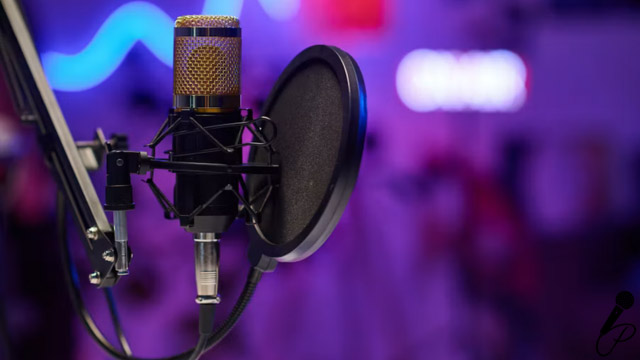
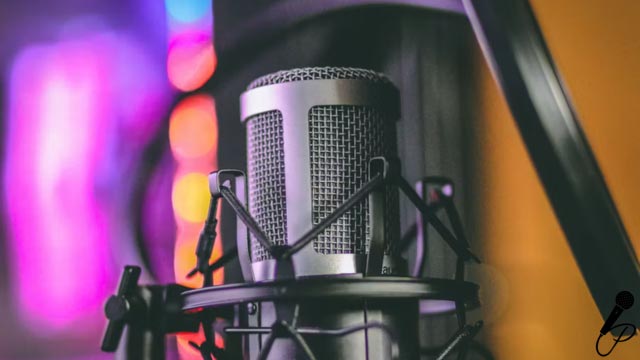
- Microphone: A dedicated podcasting microphone outperforms built-in laptop or webcam audio by a wide margin. USB microphones such as the Shure MV7 or XLR options like the Shure SM7B are industry standards used across professional shows.
- Audio interface (for XLR setups): An interface converts the analog signal from XLR microphones to digital audio. The Focusrite Scarlett 2i2 is a widely used entry-level option that produces broadcast-quality results.
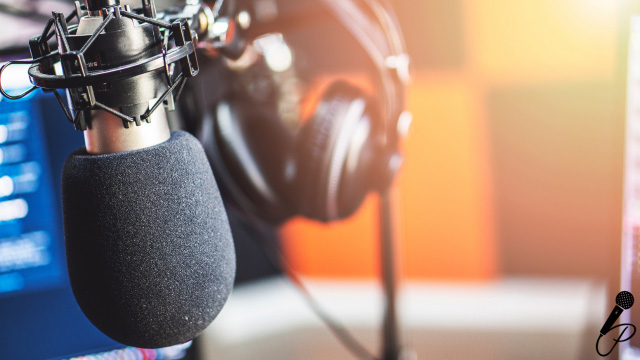
- Headphones: Closed-back headphones allow hosts to monitor their own audio in real-time, catching issues during recording rather than in post-production.
- Pop filter or windscreen: These reduce plosive sounds (hard “p” and “b” sounds) that commonly affect untreated recording environments.
- Camera (for video podcasts): If the show will be recorded on video, a dedicated camera — even a modern smartphone with a clean interface — produces significantly better results than a webcam. Proper lighting is equally important.
Equipment selection should be guided by the show’s format, recording location, and whether video distribution is part of the strategy. There is no single right answer — but there is a floor below which production quality begins to reflect poorly on the brand.
Element 3: A Pre-Production Workflow That Prevents Problems
The most common production failures in B2B podcasting are not technical — they’re organizational. Episodes that miss publish dates, guests who are unprepared, topics that don’t align with current business priorities: these are pre-production failures.
A structured pre-production workflow typically includes:
- An episode planning process tied to quarterly content or marketing goals
- Guest vetting and briefing procedures that set expectations in advance
- Script or outline preparation (even loosely structured episodes benefit from a prepared framework)
- Technical checks prior to every recording session
- A guest confirmation and reminder cadence to reduce no-shows and last-minute issues
Pre-production is where consistency is built. Brands that skip this layer often find themselves in reactive mode: chasing recordings, re-scheduling guests, and publishing episodes that don’t fully serve the audience.
Element 4: Post-Production Standards That Protect the Brand
Post-production is where a recorded conversation becomes a polished, publishable episode. For B2B brands, the standard matters — audiences will compare your show against others in your category, and production quality shapes that perception.
Core post-production requirements for a professional B2B podcast include:
Audio Editing and Cleanup
This includes removing false starts, extended silences, and filler words; normalizing volume levels across the episode; applying noise reduction to eliminate background hum or room tone; and ensuring consistent audio quality between the host and any guests recorded remotely.
Music and Sound Design
Intro and outro music establishes the show’s identity and professionalism. Music selection should reflect the brand’s tone and be properly licensed. Royalty-free libraries such as Epidemic Sound and Envanto offer licensed tracks suited to professional productions.
Transcription and Show Notes
Transcripts support accessibility and significantly extend the SEO value of each episode. Well-structured show notes — including timestamps, guest bios, and topic summaries — improve the audience experience and support content repurposing across other channels.
Video Production (If Applicable)
For podcasts distributed on YouTube or embedded in video content, post-production expands to include video editing, title cards, lower thirds, and optimized thumbnails. Video podcasts require additional production time and expertise but unlock access to the largest content discovery platform available.
Element 5: A Reliable Publishing and Distribution System
Even the best-produced episode fails to perform if it isn’t published on time, distributed correctly, or submitted to the right platforms.
A professional B2B podcast publishing process covers:
- Hosting platform selection: Choose a hosting platform that provides reliable distribution, detailed analytics, and clean RSS feed management. Options such as Captivate.fm and Libsyn are widely used at the professional level.
- Platform distribution: Confirm the show is listed and current on Apple Podcasts, Spotify, Amazon Music, and YouTube — the four platforms that capture the majority of podcast consumption.
- Episode scheduling: Batch scheduling episodes in advance reduces the risk of missed publish dates and allows the team to focus on recording rather than last-minute operations.
- Promotional assets: Each episode should ship with audiograms or video clips, social captions, and newsletter copy ready to deploy.
A consistent publishing cadence is one of the strongest signals to both audience and algorithm that a show is worth following. Inconsistency has a measurable effect on audience retention and platform visibility.
In-House Production vs. Working With a Podcast Production Agency
One of the most important decisions B2B brands face is whether to handle podcast production internally or partner with a specialized production team.
In-house production gives the team full control and can reduce per-episode costs over time — but requires internal resources, technical training, and consistent capacity. For companies where podcast production is not a core competency, the learning curve is steep and the hidden costs (staff time, equipment, missed deadlines) often exceed initial estimates.
Working with a production agency provides immediate access to professional expertise, established workflows, and quality standards the internal team doesn’t have to build from scratch. It also frees executive hosts and marketing teams to focus on content strategy and guest relationships rather than technical execution.
The right choice depends on the show’s goals, production volume, and internal bandwidth. For most B2B brands launching or scaling a podcast, working with a podcast production partner at least through the first season establishes quality standards that carry forward.
Common B2B Podcast Production Mistakes
- Recording in acoustically untreated spaces without testing first
- Using built-in laptop or webcam microphones for the primary recording
- Skipping guest briefings, which leads to poor audio on the guest’s end
- Publishing episodes without a consistent edit or quality check
- Treating publishing as a manual, episodic task rather than a systemized workflow
- Failing to produce companion content (transcripts, show notes, video clips) that extends each episode’s value
These mistakes are common in B2B podcasts that treat production as an afterthought. The shows that build durable audiences and generate business results are those that treat production as infrastructure — not overhead.
FAQs: B2B Podcast Production
How much does it cost to produce a B2B podcast professionally?
Costs vary significantly based on show frequency, episode length, video vs. audio-only, and whether production is in-house or outsourced. Professional agency production typically ranges from $500 to $3,000 or more per episode depending on scope. In-house setups require an equipment investment of $500 to $2,000 upfront, plus ongoing staff time.
How long does post-production take per episode?
A standard 30-to-45-minute B2B podcast episode typically requires two to four hours of post-production for editing, noise reduction, and assembly. Video podcasts take longer. Batch production — recording multiple episodes in a single session — significantly improves efficiency.
What is the best recording software for a B2B podcast?
For remote recordings, Riverside.fm and Squadcast are industry standards. For editing, Adobe Audition and Descript offer professional capabilities at different price points.
Do B2B podcasts need video?
Not necessarily — but video distribution increasingly amplifies reach. Publishing on YouTube in particular extends discoverability significantly. B2B brands with strong executive hosts and a defined visual brand often find video adds meaningful value. The decision should be driven by distribution strategy, not by assumption.
How often should a B2B podcast publish?
Bi-weekly (every two weeks) is the most common and sustainable cadence for B2B brands. Weekly publishing is possible but requires significant production infrastructure. The most important factor is consistency — a reliable cadence audiences can count on outperforms an aggressive schedule that lapses.
Final Word: Production Is the Foundation, Not the Finish Line
A well-produced B2B podcast doesn’t just sound professional. It performs professionally — in how it builds audience trust, how it supports the broader marketing strategy, and how it holds up over time as a content asset.
The brands that get the most from podcasting are those that treat production as infrastructure from day one, not something to fix later.
If you’re building or scaling a B2B podcast and want to ensure it’s built on the right foundation, explore how Produce Your Podcast approaches strategy and production for B2B brands.
Work With Produce Your Podcast
Produce Your Podcast is a premier podcast consulting, production, and marketing agency helping B2B brands launch, grow, and scale podcasts that support real business goals.
From recording setup and technical standards to editing, distribution, and content strategy — we build shows that work as hard as the rest of your marketing stack.
Schedule a conversation with our team and let’s build a podcast that performs.